01 / EXISTING MODEL
Start with a Current Style
Review the real photos, dimensions, finish and MOQ of the existing style below. Send the model number, required quantity and fixture details when you ask for a quote.
View the Existing ModelWHOLESALE & CUSTOM GLASS SHADES
Glass shade components for lighting brands and fixture manufacturers. Choose an existing shade or send us a drawing for a new mold. We review shape, mounting fit, appearance and planned quantity before quoting.
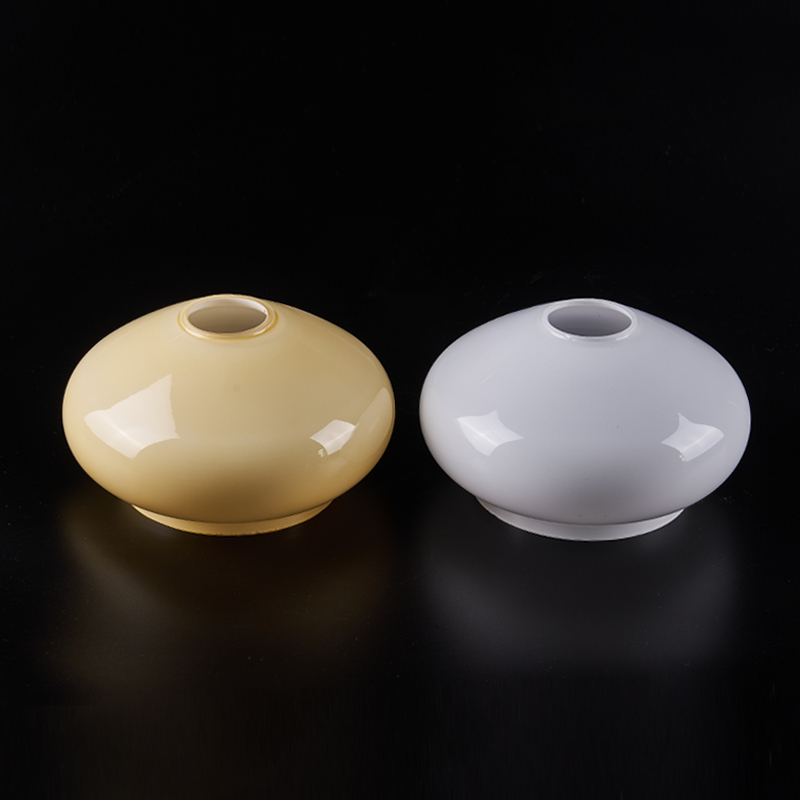
Choose a current style or develop a new shape for your fixture.
Review the real photos, dimensions, finish and MOQ of the existing style below. Send the model number, required quantity and fixture details when you ask for a quote.
View the Existing ModelSend a drawing or reference with the desired profile, opening, color, finish and planned quantity. We can review mold and sample feasibility before quoting.
Explore the Custom Route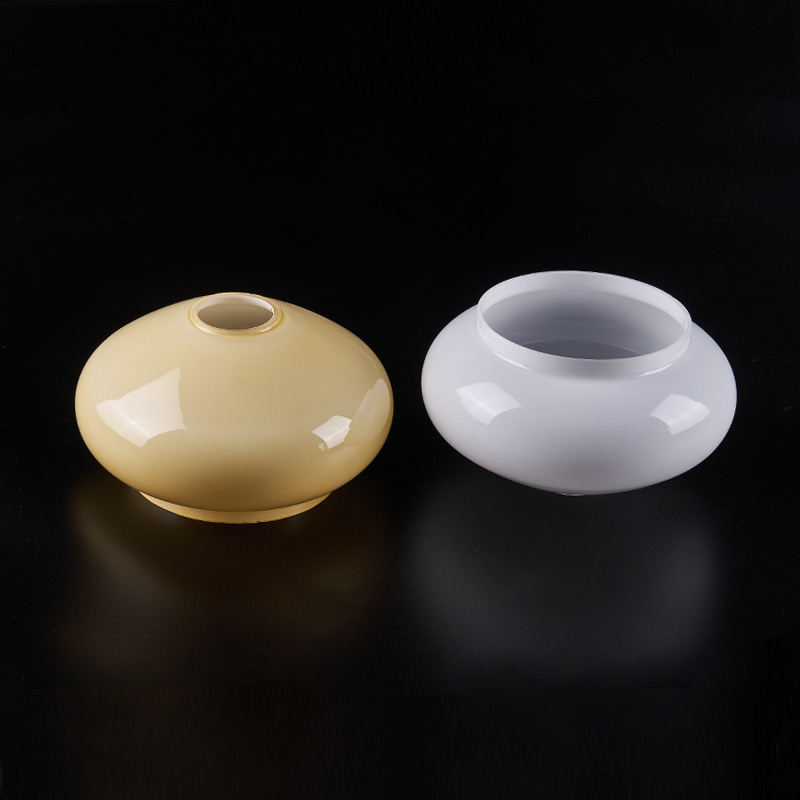
A mouth-blown glass shade with an oval profile and a glossy surface, shown in opal white and cream. Review the model details and mounting requirements for your fixture.
Confirm the selected version, quantity by color and mounting details when requesting a quote.
Browse All Glass Lamp Shades ↗Send a drawing, existing sample or reference image. We will review the glass shape, fixture fit and finish with you before quoting a new mold and sample.
Send the target profile, body size, opening or neck, and the hardware that will hold the glass. A drawing or existing sample helps define the contact points.
Provide a color or finish reference and the intended light source. Agree on the appearance with a physical sample before repeat production.
We review mold feasibility and confirm the sample requirements for the selected design. MOQ, tooling cost and production timing are quoted for that specification.
In mouth-blown glassmaking, air is blown through a blowpipe to expand hot glass. Tools or a mold may be used to shape the body and surface details.
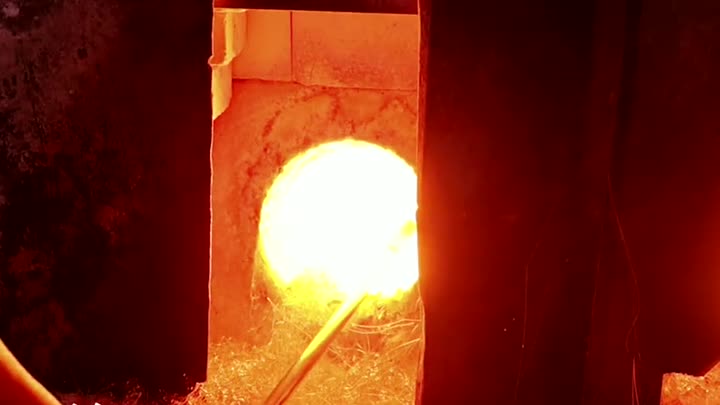
Molten glass is gathered onto a blowpipe for the selected shade form.
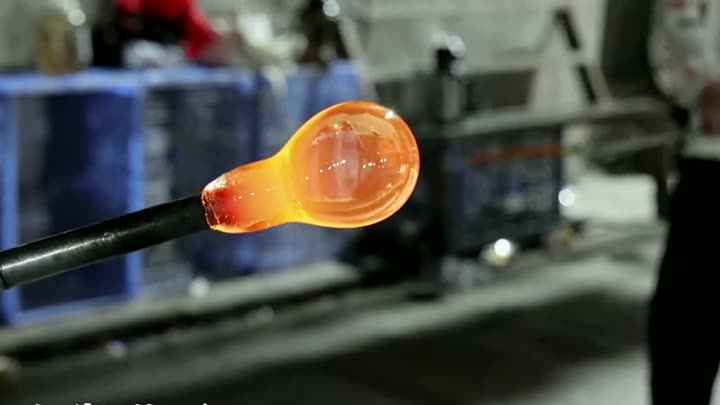
Air begins to expand the hot glass while the blowpipe keeps it moving.
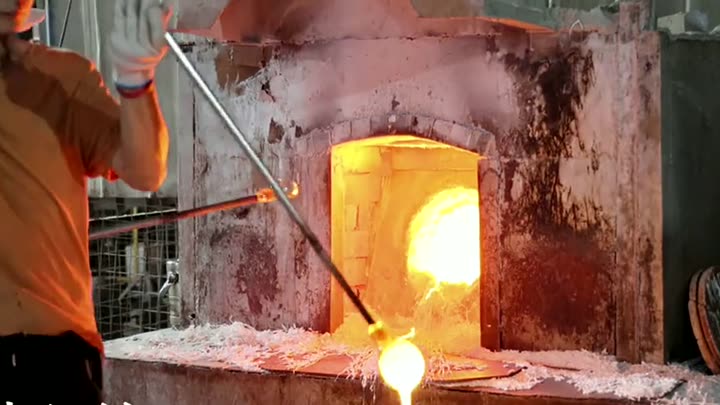
For the opal shade shown, a white layer is added while the glass is hot.
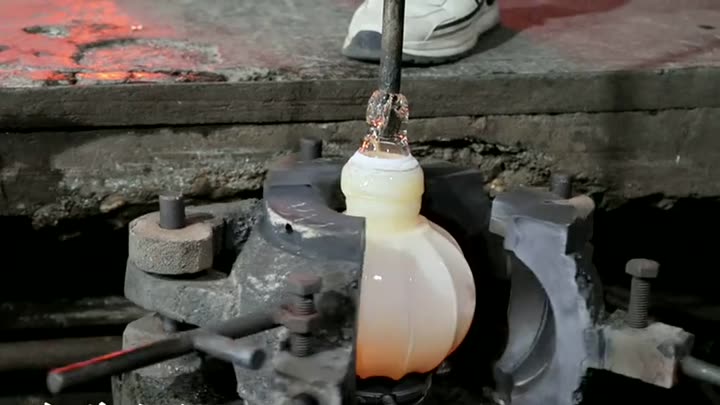
A mold can set the rounded profile of the blown glass body.
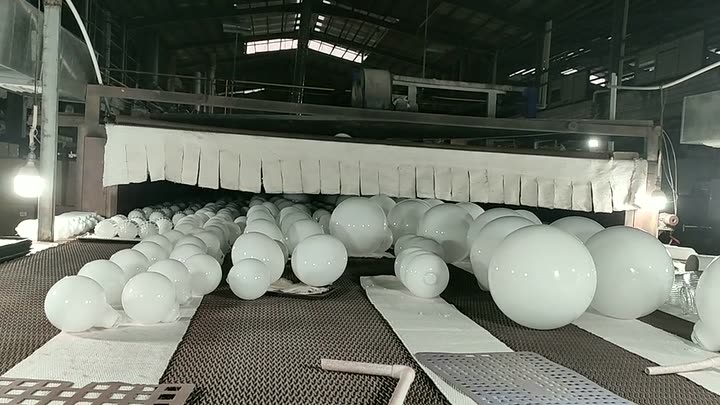
Formed shades cool through the annealing line before finishing.
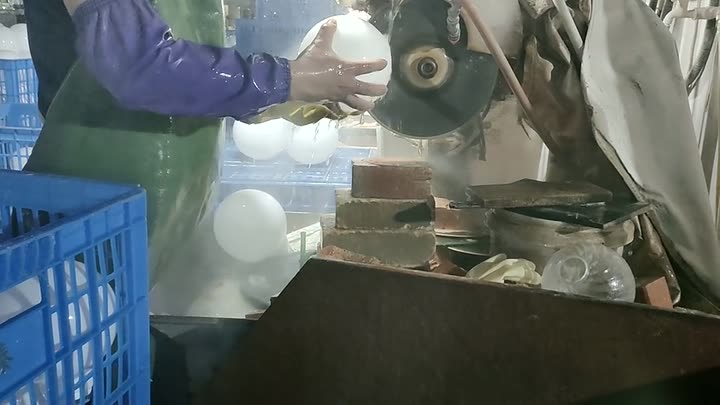
The opening is cut to the dimensions agreed for the fixture.
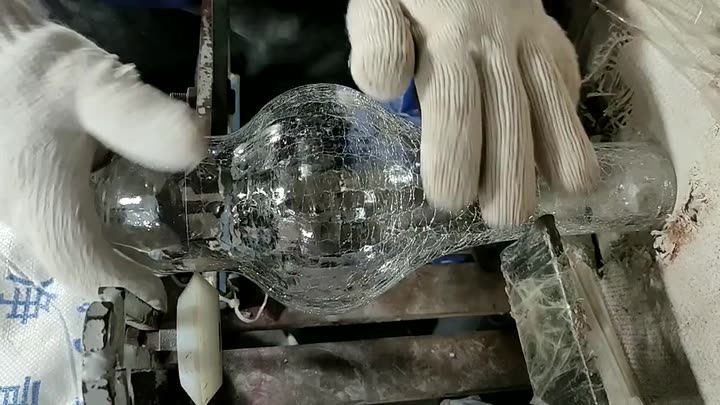
The cut rim is ground to prepare a smooth contact surface.
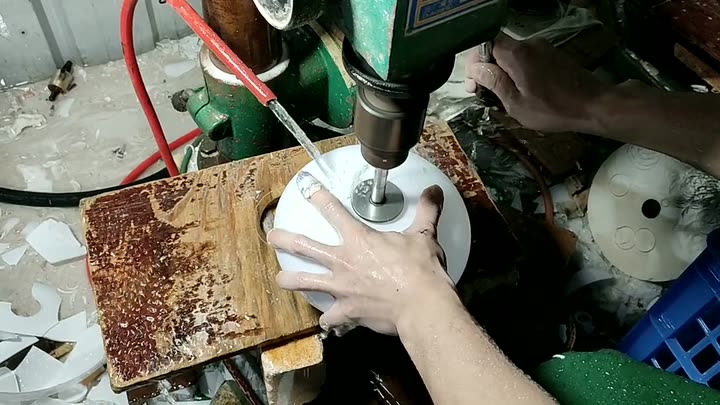
A mounting hole is drilled where the approved design requires one.
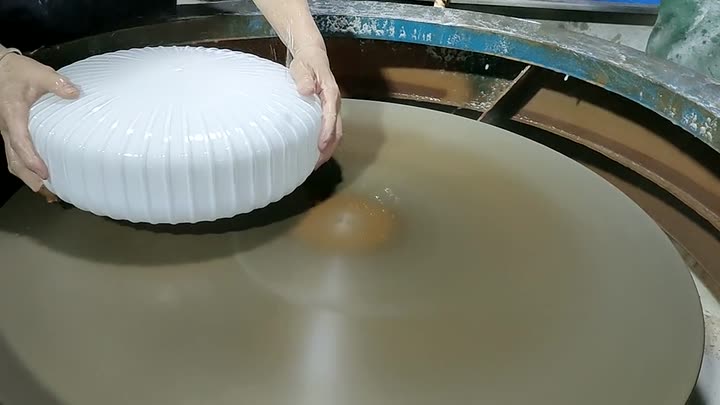
The shade is rinsed so its form and surface can be checked.
Annealing uses controlled cooling to reduce internal stress. Opening and edge work depend on the design, so confirm the forming and finishing requirements for the selected model.
Agree on the critical dimensions and appearance criteria before placing a production order. An approved sample provides a reference; the acceptable variation should also be defined.
Identify the dimensions that control assembly and agree on their tolerances. Check the sample with the intended hardware.
Agree on color, surface and any decorative features. If shades will be used together, review samples as a group.
Keep the agreed drawing version and appearance reference. Note any changes to the fixture, quantity or packing requirements when reordering.
Send a model number or drawing reference, the quantity you need and the delivery country. Add the shape, appearance and mounting details that matter to your project.
For a custom design, paste a drawing or reference link and describe the key requirements in Project details.